Impact Lab 2027 Selection
The FIFDH programme for professionals returns for its 9th edition! Impact Days offers inspiring public events, both online and in person in Geneva, as well as an annual training programme – the Impact Lab – for international film projects. We are delighted to announce the 12 projects selected for 2027.
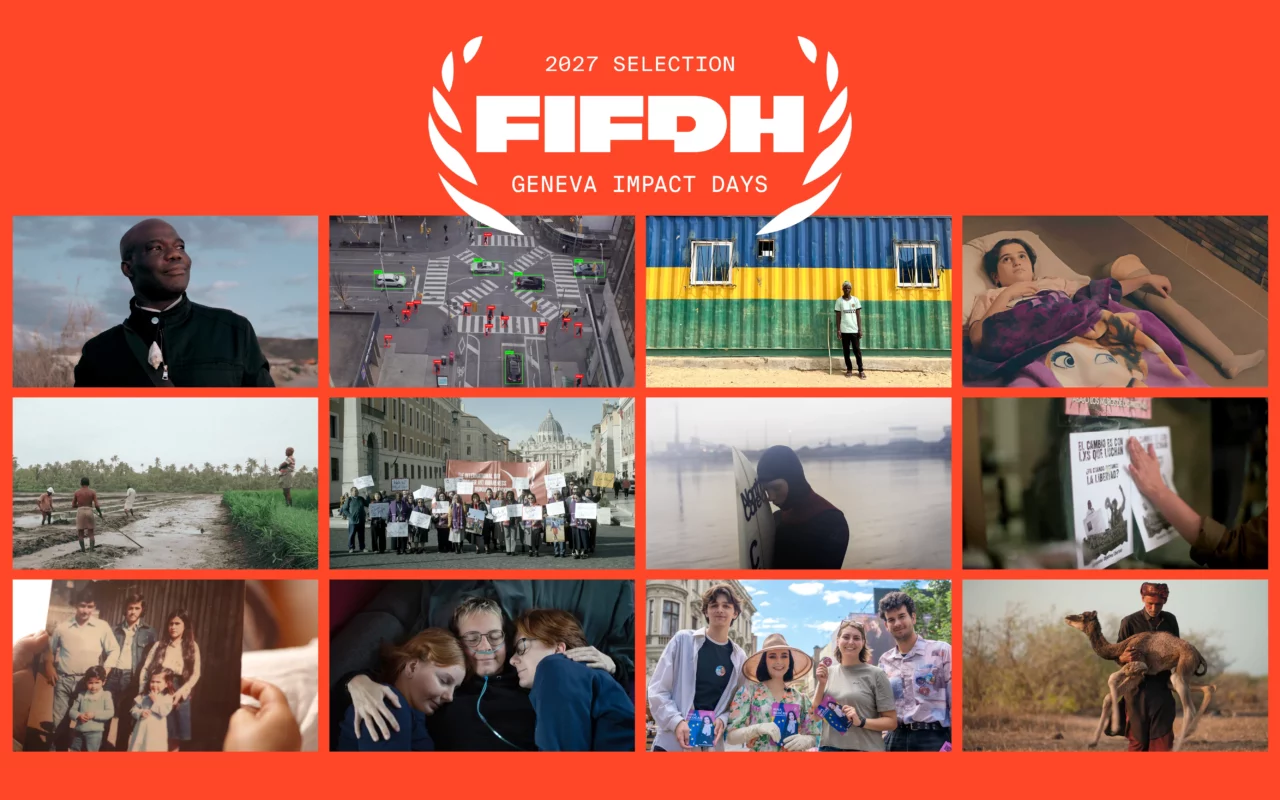
The FIFDH Impact Days features an international annual training programme: the Impact Lab. Each year we select 12 compelling documentary projects from around the globe and coach the selected film teams online over several months. From 7-9 March, the selected teams pitch their campaigns in Geneva and participate in curated meetings with international impact professionals and human rights organisations.
Discover more about our selection committee here.
From a network of Italian nuns combating human trafficking and sexual slavery, to Indian farmers preserving vital know-how against rising seas for the next generation; from a Colombian journalist denouncing judicial persecution to a Nigerian intersex person battling everyday prejudice; from the exposing of creeping facial recognition technology across the globe, to a Kurdish child rebuilding her childhood as a war amputee, and more, the 2027 selection goes around the world to report and impact upon urgent issues.
Details below and on our online catalogue, designed for outreach, education and advocacy purposes in collaboration with NGOs, international organisations and impact funders.
The 2027 projects’ full impact strategy and trailers will be posted in February once the teams have completed their Impact Lab training.
THE 12 SELECTED PROJECTS

#ClickRevolution
by Anja Strelec (Croatia)
When Nina, a young Croatian influencer, leads an independent Gen Z list into the 2024 European Parliament elections, she becomes the face of her generation. Converting likes into votes brings a new visibility – and unexpected consequences.

Before the Feast
by Rajani Mani (India)
In Kochi’s sea-facing salt marshes, aging farmer Vincent protects a rare salt-tolerant rice for the next generation, as rising seas threaten his seeds and legacy. His family is forced to weigh abandoning tradition against preserving knowledge vital for a warming world.

Camels of the Sea
by Vikram Singh (India)
Swimming camels, traveling caravans and nomadic customs collide with extractive capitalism in this portrait of a village on the frontlines of India’s often brutal march towards becoming an economic powerhouse.

ExCoded
by Javier Lovera (Canada)
Amidst the steady creep of facial recognition technology into policing, immigration, and even schools, people harmed by AI – aka the ‘excoded’ – are taking on a system that’s rapidly rewriting the rules of public life.

Justice in the Land of Fog
by Laura Dauden (Brazil)
In Colombia, a journalist investigating the judicial persecution of activists and a mother facing it firsthand cross paths, raising a question neither can answer alone: what happens to democracy when justice is turned against dissent?

Sara
by Harde Samir (Iraq)
After losing her right leg in a Turkish bombardment in northern Syria, a Kurdish girl living as a refugee in Iraq learns to walk again, expresses herself through art, and hopes for a safer future as her family seeks asylum in Europe.

Sisters Act
de Dea Gjinovci (Switzerland) et Antoine Goldet (France)
Sisters Act follows a group of fearless nuns who have formed an international network to combat sexual slavery and act as a counterweight to the extensive human trafficking networks that exploit women between Africa and Europe.

Smoking Shores
by David Roland Warwick (United Kingdom)
In the shadow of the UK’s largest steelworks, a close-knit surfing community offers an intimate perspective on working-class life, community resilience and the search for belonging in a changing world.

Still Here
by Linda Kallistová Jablonská (Czech Republic)
The story of a family where love, humour, and a sense of belonging are the most precious values, helping the oncology and palliative care patient Zorka and her two daughters, Veronika and Bára, never give up.

The Displaced
de María José Calderón (Chili) and Samuel Pigott (United States)
A Chilean woman displaced by Pinochet at age four now fights to reclaim her land from the billionaire-owned ‘eco-reserve’ built on it — and to force a state that erased her community’s history to finally remember.

The Others
by Ofelia de Pablo and Javier Zurita (Spain)
In Almería, the heart of Europe’s greenhouse, food is certified as organic and sustainable while the migrant workers who produce it remain invisible and exploited. How can food be sustainable if the people behind it live in such conditions?

The Road to Bama
by Kachi Benson (Nigeria)
The story of an intersex teenager in Northeast Nigeria who was kidnapped by Boko Haram, married to one of their commanders, and survived five years in captivity before being rescued – yet still found prejudice upon regaining their freedom.