Human Rights Film Tour 2025 Recap
In 2025, the joint international tour organised by FIFDH and UN Human Rights once again established itself as an essential platform for raising awareness and promoting dialogue on human rights issues through creative and socially engaged films.
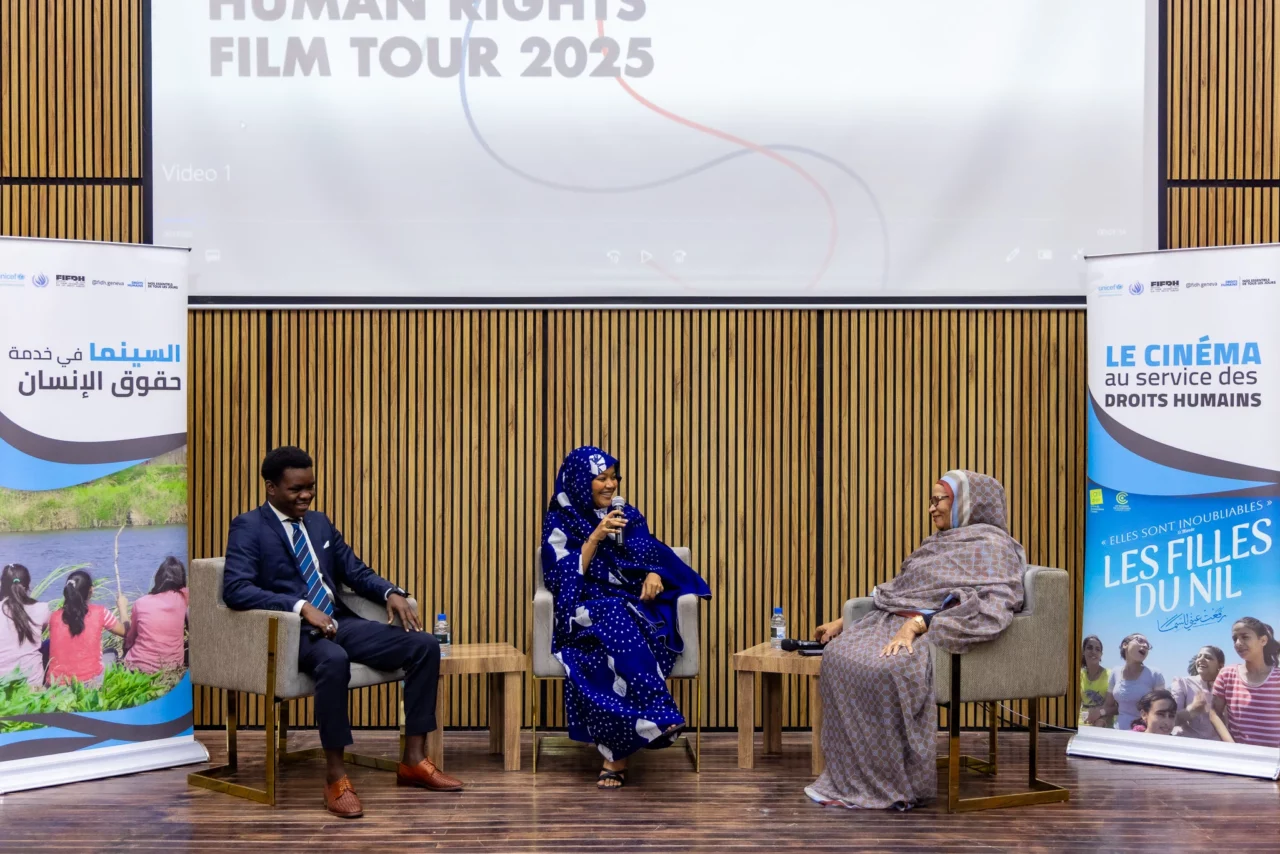
This edition was part of the United Nations’ Everyday Essentials campaign, which reminds us that human rights are not abstract principles, but concrete advances that shape our daily lives. The programme brought together several films from previous editions of the FIFDH as well as from its professional programme, the Impact Days. Running from 14 November to 17 December 2025, most of the screenings were concentrated around International Human Rights Day (10 December).
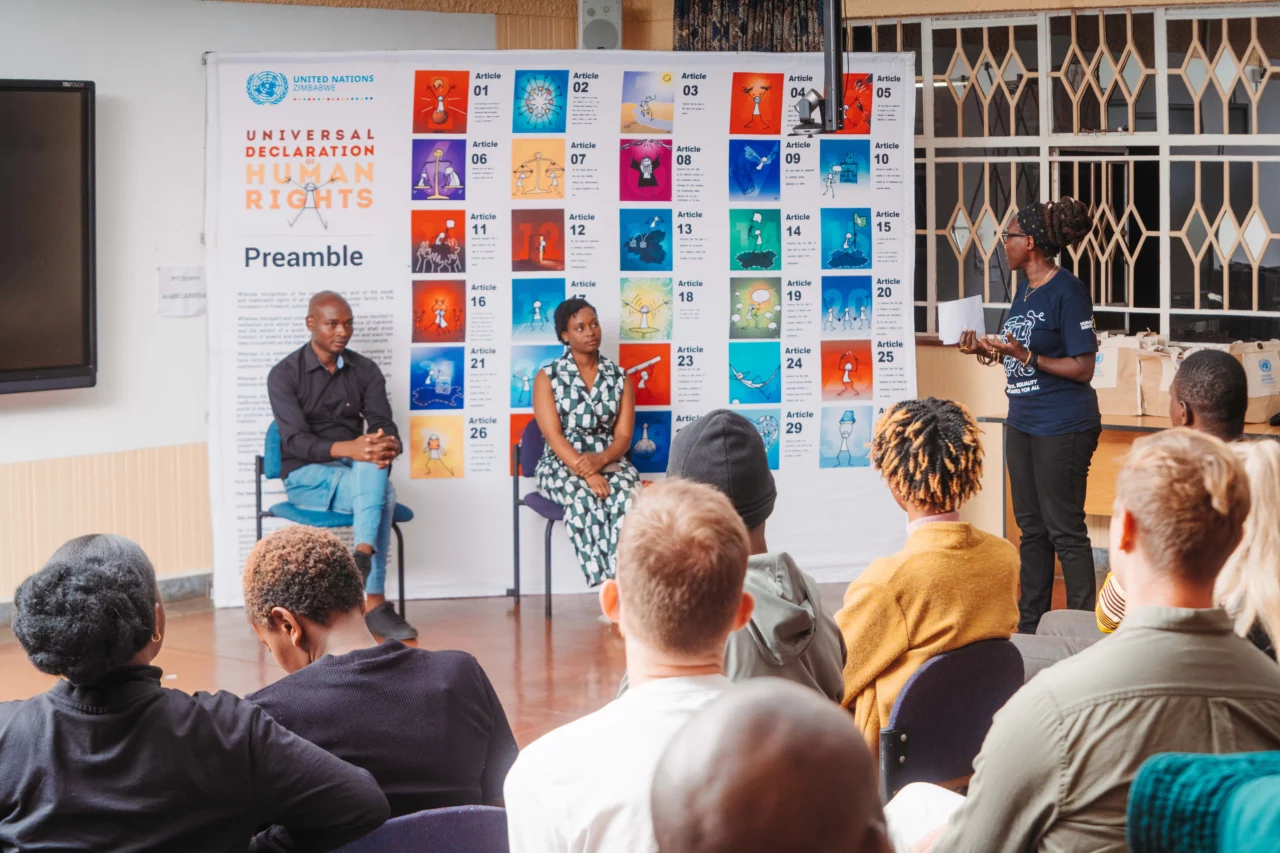
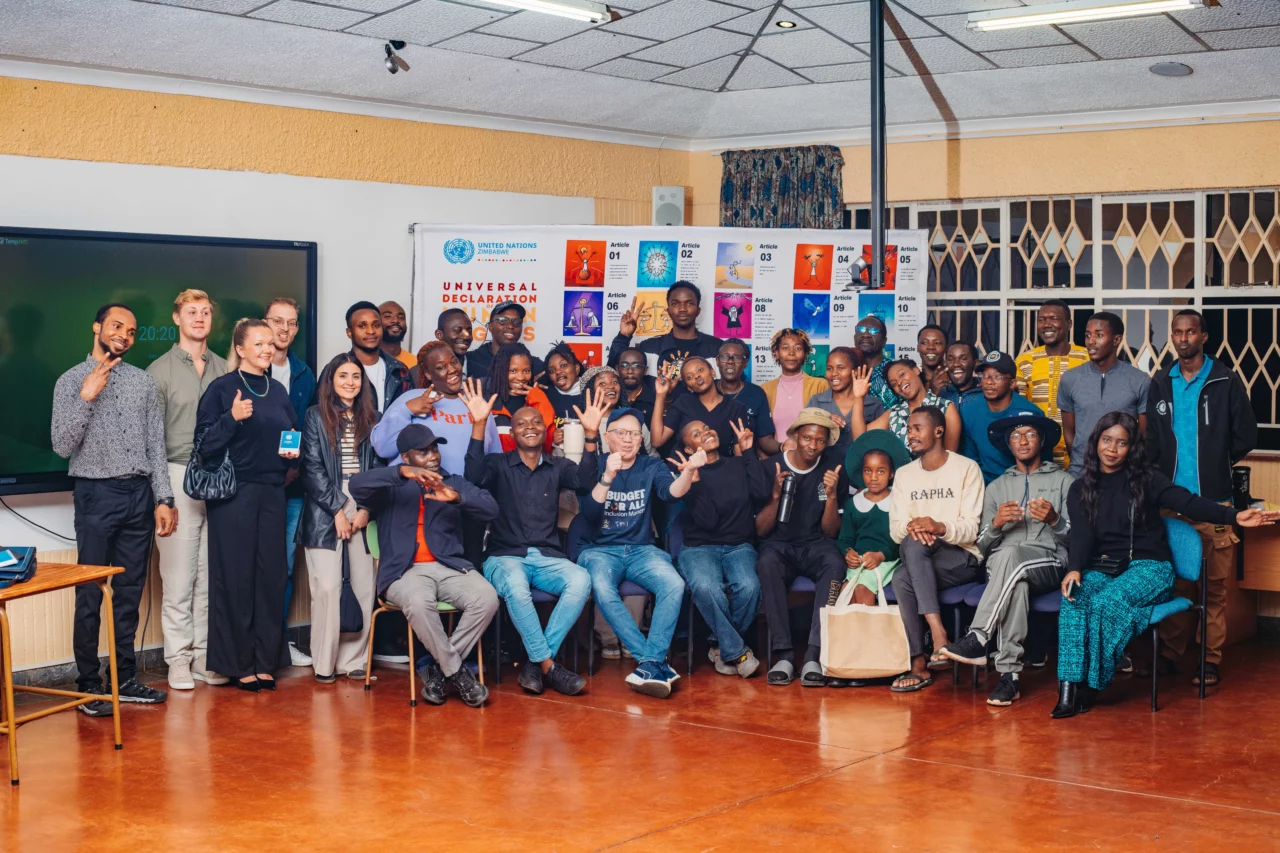
The courage to question social norms
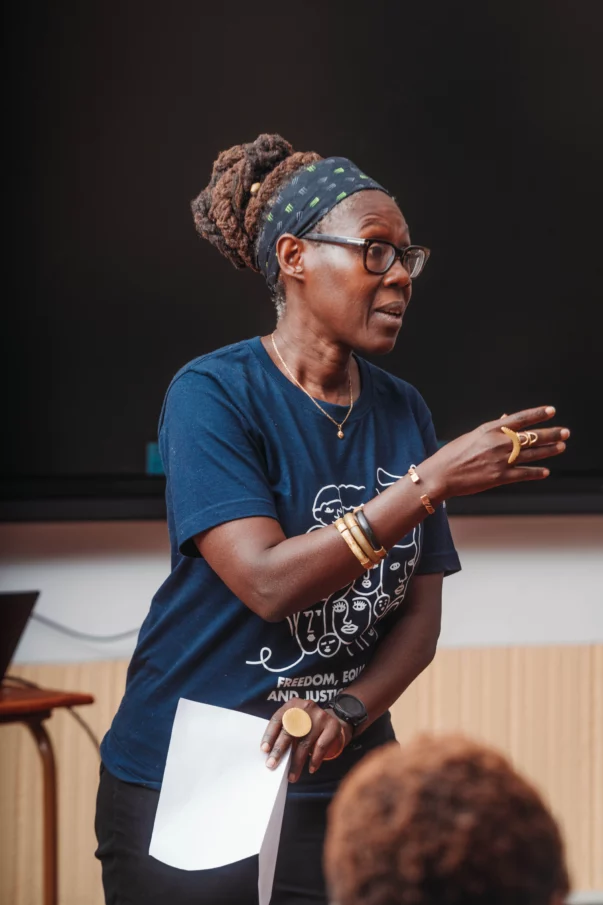
The Brink of Dreams was screened several times during the tour: first in Harare (Zimbabwe) and Addis Ababa (Ethiopia) in November, then on 10 December in Conakry (Guinea), Phnom Penh (Cambodia) and Nouakchott (Mauritania). The film then continued its journey to Podgorica (Montenegro) and Vienna (Austria), and finally Bujumbura (Burundi) on 17 December 2025.
In Nouakchott, the film screening attracted a predominantly young audience, largely made up of secondary school students. The discussions addressed children’s rights, particularly the social norms imposed on adolescents. “The film powerfully shows how girls are stigmatised from a very young age, a reality that echoes what we experience in Mauritania. Yet these girls have the courage to challenge social norms,” summarised one young participant.
Bringing marginalised stories to light


This edition of the Tour was notable for the particularly high participation of filmmakers and protagonists in the discussions following the screenings, reinforcing the interactive dimension of the tour.
Runa Simi was screened in December in Buenos Aires (Argentina), New Delhi (India), Asunción (Paraguay), and finally in Lima (Peru), where the film Karuara, People of the River was also presented the following day. Fernando Valencia, the protagonist of Runa Simi, accompanied the film on several stages, notably in Buenos Aires (Argentina) and then in Lima (Peru), where he was present alongside director Augusto Zegarra.
In Lima, discussions highlighted the audience’s strong identification with the film’s themes, particularly among participants from Quechua communities. Several speakers emphasised the importance of bringing this story to the screen in order to give visibility to historically marginalised voices and experiences.


Echoing the “Human Rights: Our Everyday Essentials” campaign, a collaborative quipu was installed at the entrance to the auditorium. Inspired by this ancient Andean system of communication and knowledge transmission, made of strings and knots, this artistic structure invited the audience to hang a message expressing what they considered essential. As contributions poured in, the installation became a collective work reminding us of the place of human rights in everyday life.
Cinema as an advocacy tool
Some filmmakers also participated remotely. Yaara Bou Melhem, director of Yurlu | Country, spoke via videoconference during the event organised around the film in Fiji on 10 December. The discussion addressed indigenous peoples’ rights, themes of culture and identity, and challenges related to land and extractive industries. The role of cinema as an advocacy tool was also central to the discussions, particularly its ability to give voice to marginalised communities, to document injustices, and fuel demands for recognition, justice, and reparation. In this context, Letila Mitchell, artist and cultural advisor for the Pacific Community, emphasised that “Some of the most powerful films are those in which the filmmaker does not follow their script, but rather the voices and stories of the people most affected, who are often deprived of a voice. A good director must know how to build the film around these stories and let themselves be guided by them; that is where cinema deploys its most powerful form of advocacy.” The film was also screened in Port Moresby (Papua New Guinea), on 9 December.


In Beirut, during the screening of Khartoum (10 December), Ibrahim Ahmad ‘Snoopy’, one of the directors, took part in the discussions. One of the most memorable moments of this discussion was when Sudanese students in the audience spoke about how the film resonated with their own experiences of loss, resilience and hope. Their testimonies anchored the discussion in lived experience, powerfully reminding us why these stories remain essential.


The FIFDH programme for cinema professionals, Impact Days, accompanied some of these films via its annual Impact Lab training programme for international film projects. Notably, the teams of The Brink of Dreams, Runa Simi and Yurlu | Country all took part in our FIFDH Impact Lab, respectively in 2023, 2024 and 2025. You can read their impact statements in our online catalogue of films with impact campaigns here : The Brink of Dreams, Runa Simi, andYurlu | Country