New school year, new films !
To mark the start of the new school year, several films have been added to the Schools streaming platform. We are delighted to present five films that have had a significant impact on our school programme and have been seen by hundreds of students, either in our cinemas or in their classrooms.
2024 edition
How does the conflict in Ukraine threaten children’s fundamental rights?

Ivan Ostrochovský and Pavol Pekarčík
Photophobia
SLOVAKIA, CZECH REPUBLIC, 2023, 70′, OV UKRAINIAN, FR ST
Ukraine, February 2022, Niki, aged 12, and his family are forced to flee their home and take shelter in Kharkiv metro station to protect themselves from the war. Niki is forced to make the metro station his playground, as the outside world and daylight are synonymous with danger. As he wanders aimlessly among the abandoned carriages and occupied platforms, Niki meets 11-year-old Vika, and a new world opens up to him. Photophobia shows the daily lives of many people confined to metro stations from a child’s point of view and under the glare of neon lights.
This film received the Youth Jury Award – Documentary at the FIFDH 2024.
Ivan Ostrochovský and Pavol Pekarčik are two directors and producers. After directing several short documentaries and series, they made their first feature-length documentary, Velvet Terrorists, which premiered at the Berlinale in 2014.
______________________________________________
How does environmental conservation contribute to safeguarding the culture and identity of the Sámi indigenous people?
The Sámi people live mainly north of the Arctic Circle. Their territory stretches from the North Atlantic coast of Norway to the Kola Peninsula in the north of western Russia. This 260,000 km² region spans four countries: Norway, Sweden, Finland and Russia.
In this transnational region, the Sámi indigenous people are witnessing the gradual degradation of the area’s natural resources by industries such as forestry, which, combined with global warming, is damaging biodiversity and the traditional local way of life.

Anne Marte Blindheim
Rahčan / Ella’s Riot
NORWAY, 2022, 72′, OV NORWEGIAN/SÁMI, FR ST
This documentary follows the journey of Norwegian and Sámi singer Ella Marie. When a mining company threatens the land and water of the Sámis, the artist decides to leave the city to save her homeland. Together with activists, Ella sets out to protect the environment and block mining. Despite all the challenges she faces, Ella refuses to give up her fight. Because every victory for the environment is temporary, but every loss is permanent, Ella’s Riot shows us how far music, love and solidarity can take us.
Anne Marte Blindheim is a Norwegian journalist and documentary film director. She obtained a bachelor’s degree in journalism from OsloMet in 2005. Before embarking on a career in documentary filmmaking, she worked for several years as a reporter and opinion writer for daily newspapers. Rahčan – Ella’s Riot is her first feature-length documentary.
2025 edition
How does freedom of expression through art empower Coptic women?
This film is accompanied by a film analysis file, which can be found in its teaching material !
Nada Riyadh and Ayman El Amir
The Brink of Dreams
EGYPT/FRANCE/DENMARK/QATAR/SAUDI ARABIA, 2024, 52′, OV ARABIC, FR ST
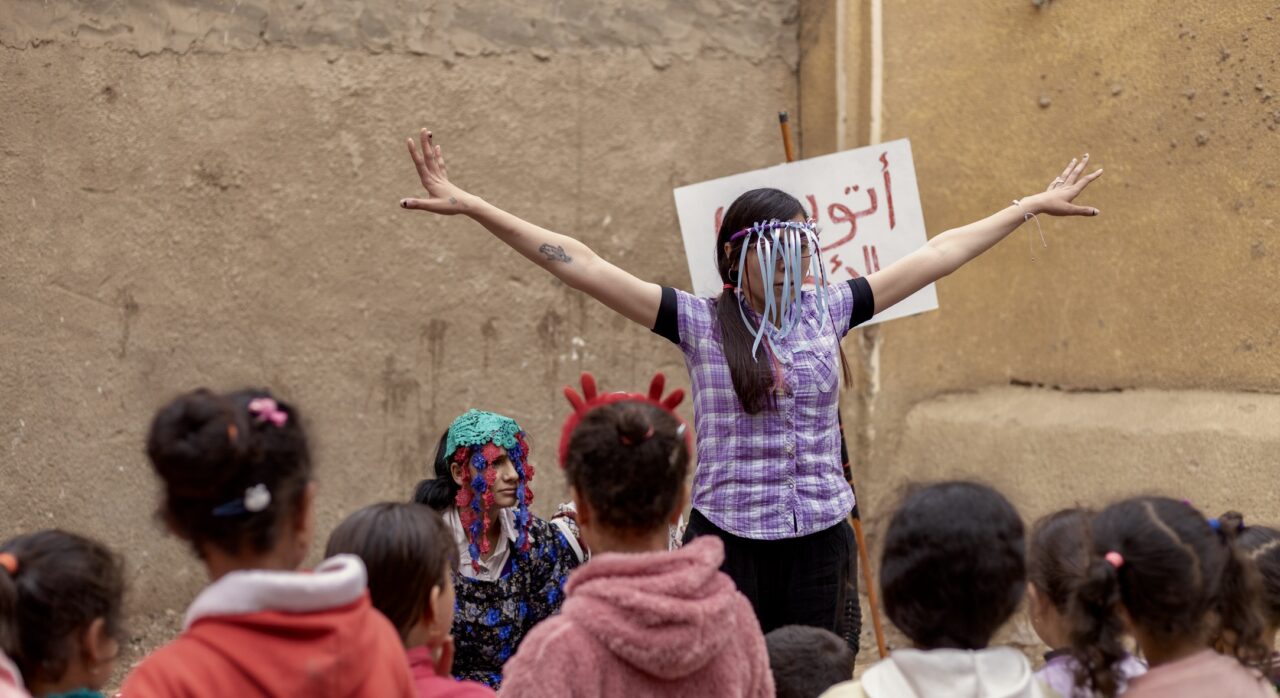
In a small conservative town in southern Egypt, a group of young girls rebels by forming a street theater troupe. Dreaming of becoming actresses, dancers, and singers, they defy their families and the local community with their shocking performances. In a society where they are destined to early marriage and to become housewives, they write and perform skits that depict their dreams and fears. Filmed over 4 years, the Brink of Dreams follows the journey of these young girls from adolescence to adulthood, showing their dreams and fears and highlighting gender inequalities. In an overtly sexist society where their future is synonymous with early marriage and housework, these women manage to find a small space of freedom in the art they practise.
Nada Riyadh and Ayman El Amir are two Egyptian directors. They directed the documentary Happily Ever After, which had its world premiere at IDFA in 2016. Nada Riyadh also directed the short film Fakh, selected for Critics’ Week in 2019. Ayman El Amir is also a script consultant for several international festivals. Their documentary Les Filles du Nil won the Golden Eye at the Cannes Film Festival in 2024 and the Geneva Grand Award at the FIFDH 2025.
______________________________________________
How are the Kukama people resisting to preserve their territory and identity?
In 2024, there are 10,762 people who identify as Kukama-Kukamiria, and their territory spans four countries: Brazil, Colombia, Venezuela and Peru. The fact that this people spans four countries raises the question of our conception of borders: what constitutes a border for us is not necessarily one for indigenous peoples.
This film is accompanied by a film analysis file, which can be found in its teaching material !
Stephanie Boyd and Miguel Araoz
Karuara, People of the River
PERU, 2024, 55’, OV SPANISH/KUKAMA-KUKAMIRIA, FR ST
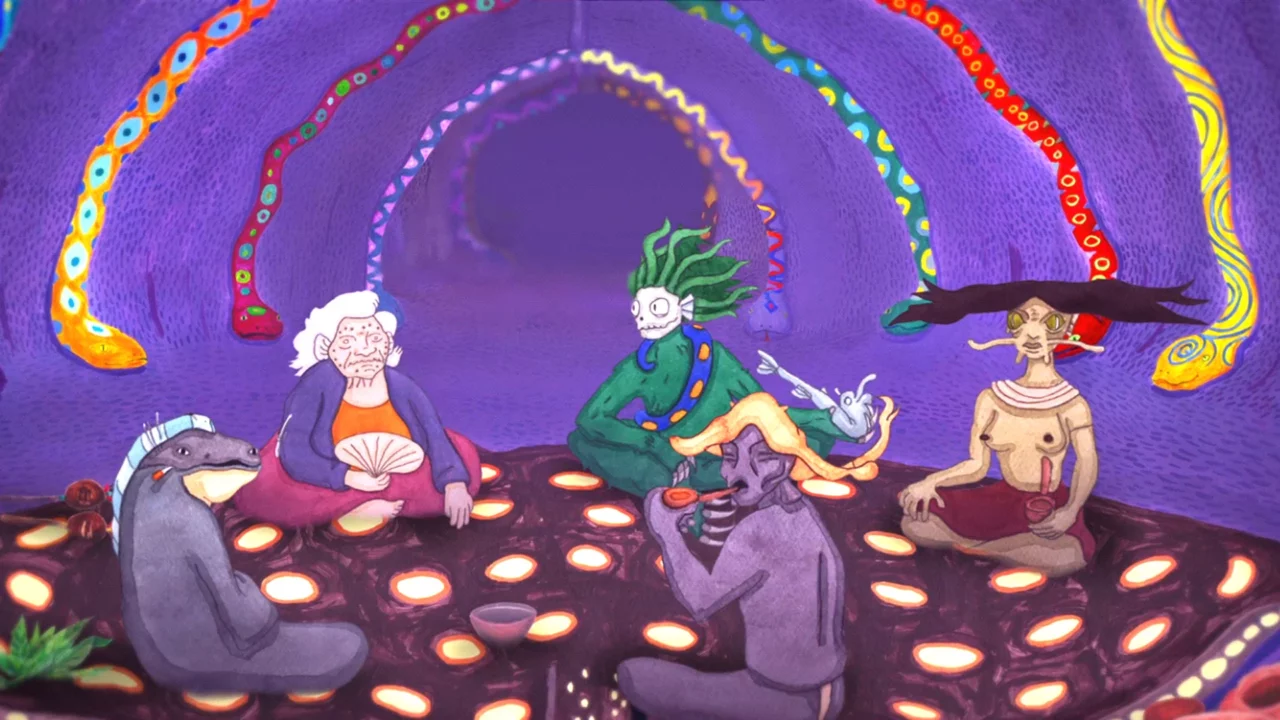
In the Peruvian Amazon, for the Kukama-Kukamiria people, the river is at the heart of society. It provides transport, fish and a place to swim and relax. Above all, it is the centre of their spirituality and history, as the river contains their ancestors who live in a parallel universe beneath the water. As a result of economic development and globalisation, the river and the Kukama culture are under threat. Foreign companies are destroying the Amazon and its resources. Indigenous communities are losing territory and lack basic infrastructure such as schools and hospitals. In a film combining animation and documentary, Karuara, People of the River reminds us of the importance of protecting the environment and waterways.
Stéphanie Boyd co-directed this documentary film with Miguel Araoz, an animation artist. Together, they led this project with Leonardo Tello, a Kukama-Kukamiria journalist and director of Radio Ucamara, as well as Mariluz Canaquiri Murayari, president of the Federation of Indigenous Kukama-Kukamiria Women. They created an animated documentary that highlights the culture of this people, while issuing an urgent call for the preservation of the Amazon.
______________________________________________
What solutions are there to climate change?
Nicolas Brown
Blue Carbon
USA/SENEGAL/VIETNAM/FRANCE/COLOMBIA/BRAZIL 2024, 59’, OV ENGLISH, PORTUGUESE, VIETNAMESE, SPANISH, WOLOF, STFR
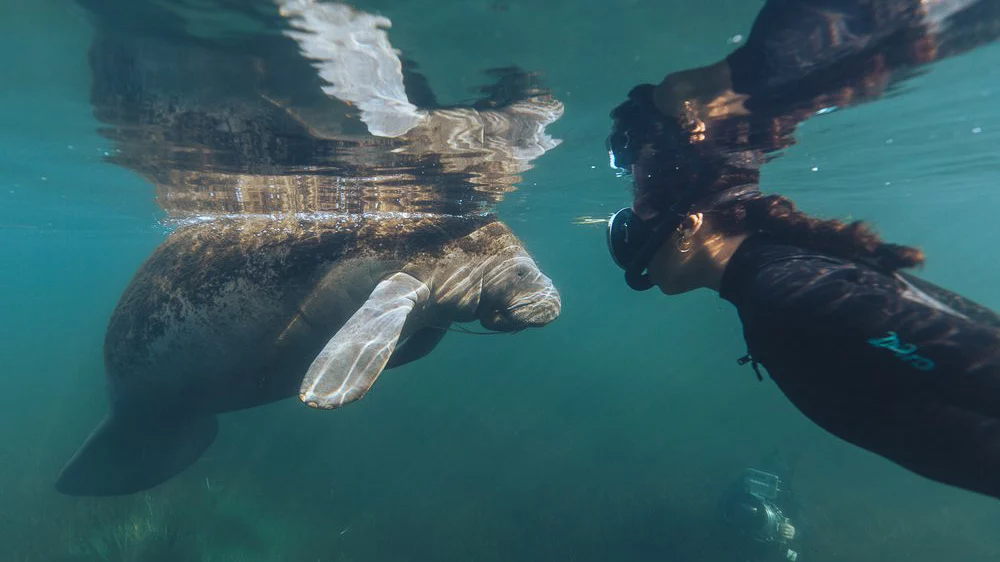
This documentary, filmed in the United States, Senegal, Vietnam, France, Colombia and Brazil, highlights the potential of the oceans to capture more carbon from the atmosphere than tropical forests can. This is known as blue carbon. It is found in mangroves, salt marshes and sea grass. In this documentary combining music and science, DJ Jayda Guy and singer Seu Jorge show us the importance of listening to nature to preserve our planet.
Nicolas Brown is an award-winning documentary filmmaker and producer, having won four Emmys, two BAFTAs and more than 65 festival awards. He is known for his environmentally conscious films, such as The Serengeti Rules, Blue Carbon and The Letter, as well as his successful documentary series such as H2O: The Molecule That Made Us and Earth: A New Wild.
Jayda Guy is an environmental toxicologist and Grammy-nominated DJ. She believes there is no boundary between these two fields: her debut album, Significant Changes, released in 2019, is an ode to her master’s thesis featuring whale sounds.