IN CLASS OR IN THE AUDITORIUM: NEW FILMS
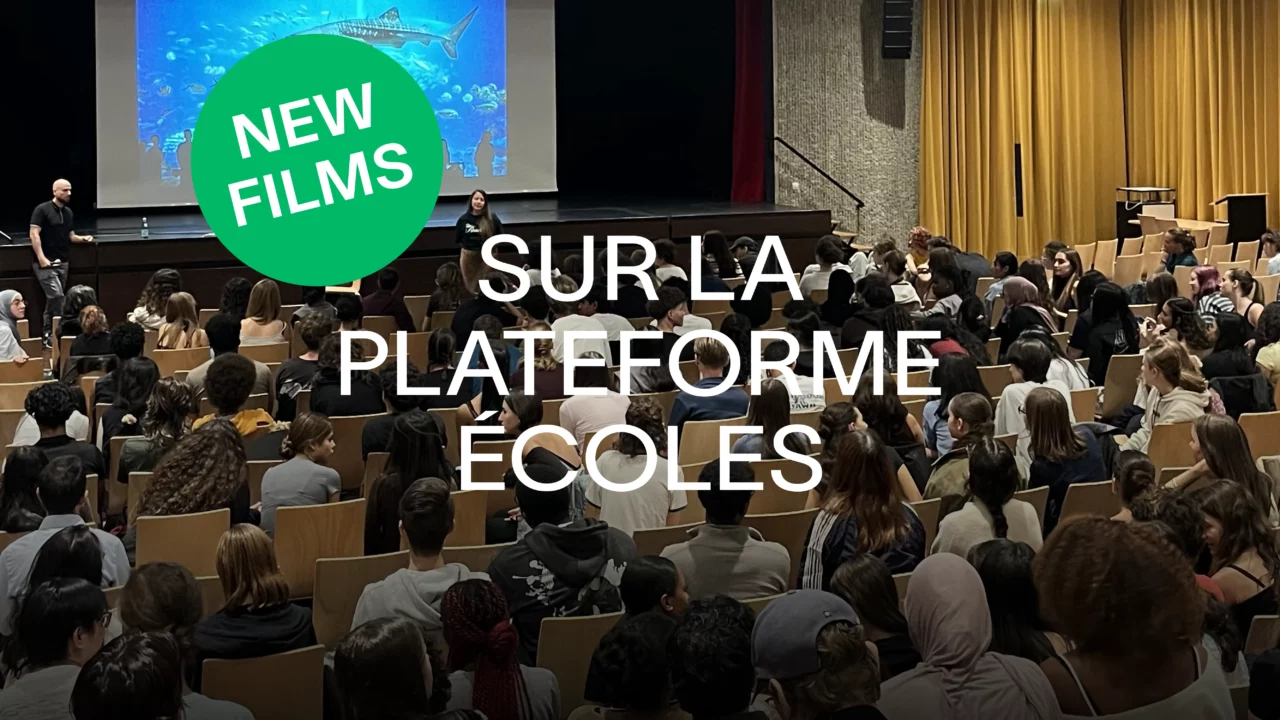
To mark the start of the school year, several films have been added to the Schools streaming platform. We are delighted to share with you seven films that have had a significant impact on our school curriculum and have been viewed by hundreds of students, either in our theaters or in classrooms.
7 new films
What does rising sea levels reveal about global inequalities?

Natxo Leuza
Black Water
SPAIN, 2025, 52’, OV BENGALI, ENGLISH, STFR
Faced with the threat of extreme weather events in southern Bangladesh, Lokhi decides to leave her home and head to Dhaka before her village is submerged by floodwaters. Like her, thousands of climate refugees are flocking to the capital, one of the world’s fastest-growing cities.
What happens when your future depends on your ability to tell the story of your own life in a compelling way?

Lisa Gerig
L’Audition
SWITZERLAND, 2023, 52′, OV GERMAN, ENG, FR, TAMOUL, DARI, STFR
Four asylum seekers relive the hearing on the reasons for their departure, a central aspect of the asylum process. Lisa Gerig thus raises essential questions: What happens when your future depends on your ability to tell your own life story in a convincing way? The Hearing doesn’t stop there. Through a reversal of roles and power dynamics, it is then the asylum seekers’ turn to question the Swiss government officials. This unprecedented approach offers insight into the delicate nature of the hearing and calls the asylum procedure itself into question.
______________________________________________
SHORT FILMS: RWANDA, 30 YEARS AFTER THE GENOCIDE
April 1994. In Kigali, the lives of a young couple and their newborn are turned upside down when the genocide begins. Years later, another generation—born in the shadow of that violence—confronts the silent legacy of mass crimes. From the immediate destruction to its lingering, personal effects, these two short films trace a continuum between collective history and the lives that still bear its marks.
What contextual factors contributed to the genocide?

Justice Rutikara
Ibuka, Justice
RWANDA, CANADA, 2024, 23’, OV FR, KINYARWANDA, STFR
Ibuka follows Valentine and Jean-Claude, a newlywed couple, at the very outset of the civil war and the massacres that swept through Rwanda in 1994. Living in Kigali, the nation’s capital, these young parents make repeated attempts to flee the killings with their newborn baby. Ibuka is a poetic work, full of tenderness and clarity, about a historical tragedy experienced through the intimate life and formation of a young family bound together forever.
What justice and healing await the survivors?

Ornella Mutoni
The Things We Don’t Say
UNITED KINGDOMS, 2024, 20’, OV KINYARWANDA, STFR
Thirty years after the genocide, a group of young Rwandans is confronted with buried family secrets and inherited trauma. With the help of their therapist, Emilienne, they come together to break the vicious cycle of suffering and begin to heal the wounds passed down from generation to generation.
______________________________________________
How can personal stories contribute to collective memory?

Dea Gjinovci
La Beauté de l’Âne
SWITZERLAND/USA/KOSOVO, 2025, 60’, OV ALBANIAN/FR, STFR
After sixty years in exile, Dea accompanies her father, Asllan, to his hometown of Makermal in Kosovo to rekindle memories erased by the war. Amid joyful recollections and painful revelations, father and daughter come to terms with the loss of a mother figure and the wounds of a community. The film offers a sensitive meditation on the fragility of memory, straddling the line between documentary cinema and magical realism.
______________________________________________
How does art serve as a catalyst for feminist struggles and raising awareness of LGBTQIA+ rights?

Karen Vázquez Guadarrama
Draw for Change : We Are Fire
MEXICO, 2023, 54’, OV SPANISH, STFR
Through the drawings she shares on her Instagram account, Mar Maremoto depicts women who resemble her: dissidents, self-assured, and vulnerable. The Mexican illustrator addresses issues related to feminism, LGBTQIA+ rights, as well as mental health and self-esteem. In a country plagued by an epidemic of femicide and gender-based violence, art serves as a platform for fighting together and healing collectively.
How can we shed light on working conditions in manufacturing plants?

Parsifal Reparato
SHE
VIETNAM/ITALY/FRANCE, 2025, 52’, OV VIETNAMISE, STFR
In Vietnam, SHE tells the story of the female workers at one of the world’s largest electronics component factories. Their stories, marked by capitalist exploitation and patriarchy, are conveyed through a single voice that unites them all. SHE is at once a mother, a daughter, a wife, a single woman, a migrant, and a resident.
New Online Educational Content
For each of these films, check out the educational videos featuring filmmakers and subject-matter experts right now!
As part of our collaboration with E-Media, the teaching guides for the entire 2026 school curriculum have been enhanced with film analysis resources to explore with your students! The educational content related to the films is therefore accompanied by media literacy exercises to be completed in class before, during, and after watching the film. These resources can be found on each film’s page.